
How VR and MR Technology Transform Acupoint Precision Training for the Next Generation of Acupuncturists
Introduction
Every acupuncture student faces the same fundamental challenge on their first day of training: acupoints and meridian pathways are invisible. Unlike anatomy students who can observe muscles, bones, and organs through dissection or imaging, acupuncture learners must mentally construct three-dimensional spatial relationships from two-dimensional diagrams, memorize point locations using anatomical landmarks, and develop needle technique through trial and error—often on live patients or practice partners.
This challenge has persisted throughout acupuncture's 2,000-year history. Traditional education relies heavily on flat textbook illustrations that fail to convey depth and spatial relationships, physical models with limited anatomical context, instructor demonstrations that students observe but cannot manipulate independently, and practice on human subjects before technique mastery—creating safety concerns and learning anxiety.
But what if you could see meridian pathways flowing through the body in three dimensions? What if you could rotate a virtual patient 360 degrees, zoom into specific anatomical regions, and practice needle insertion angles hundreds of times before ever touching a patient? What if the invisible became visible?
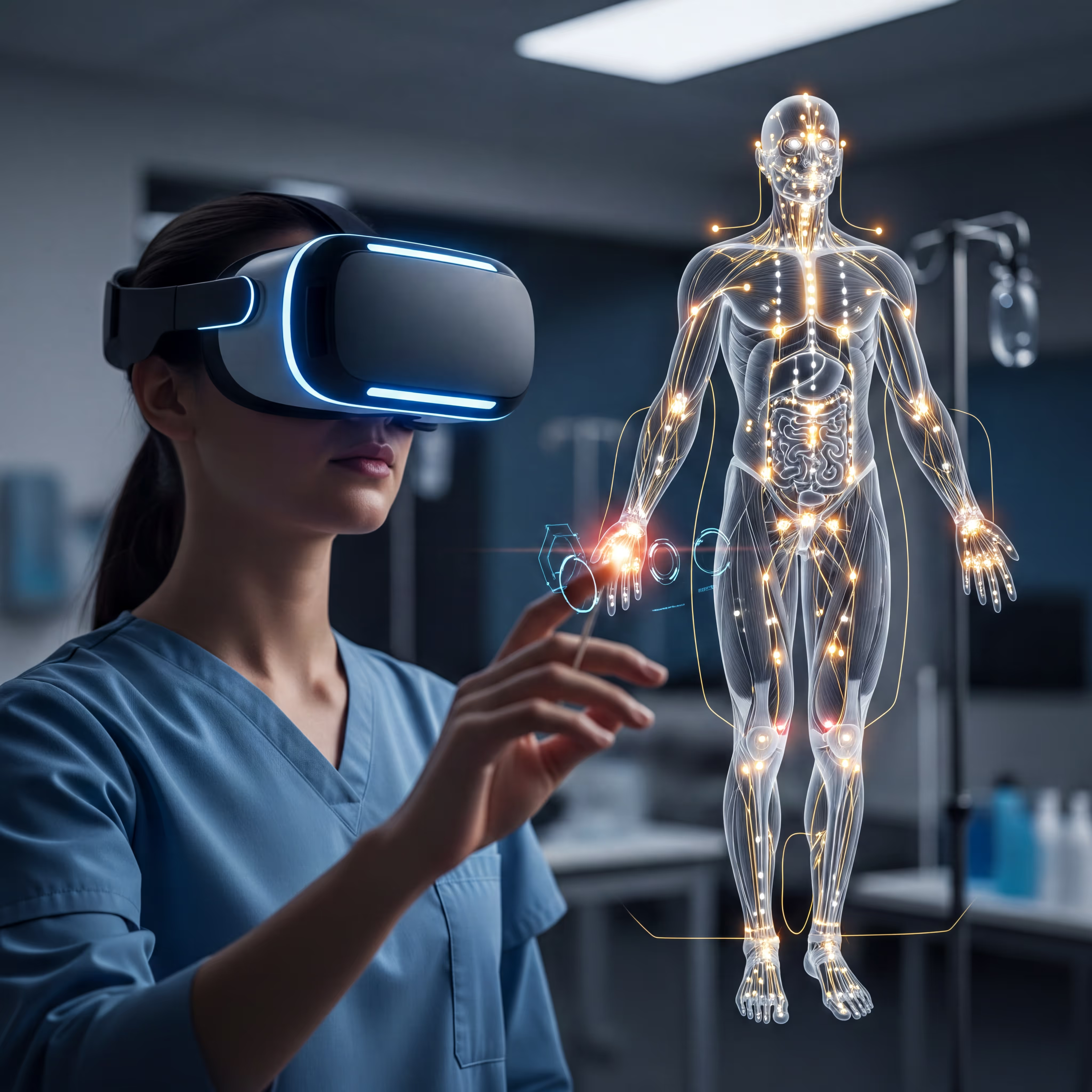
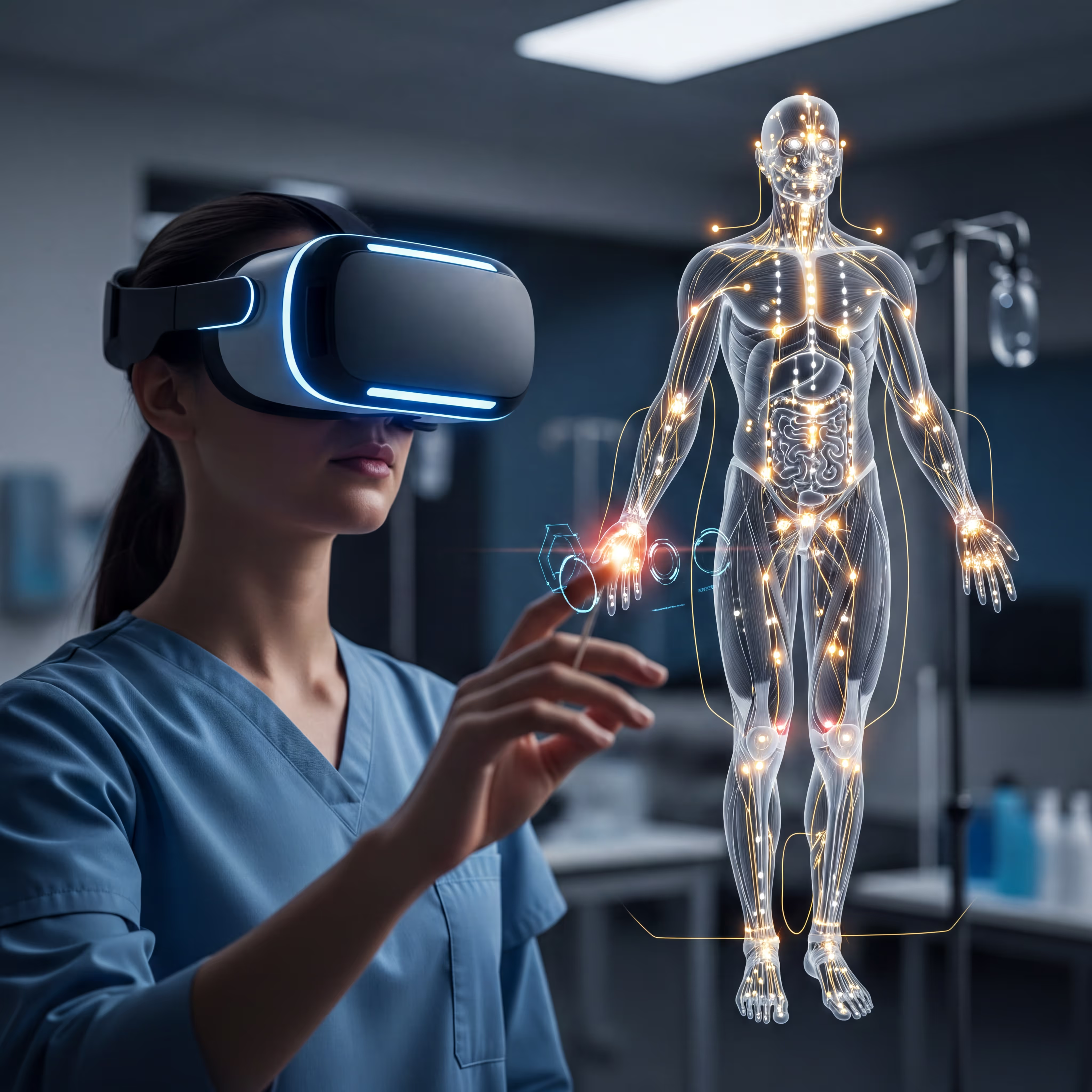
AcuMap, developed by Medical Augmented Intelligence (MAI), brings acupuncture education into the immersive age. Using virtual reality (VR) and mixed reality (MR) technology, AcuMap transforms abstract Traditional Chinese Medicine concepts into tangible, interactive 3D experiences. Students and practitioners can visualize meridian pathways overlaid on detailed anatomical structures, practice needle techniques with real-time feedback, and collaborate with peers worldwide—all within a safe, repeatable virtual environment.
This article explores how AcuMap's precision visualization tools address the core challenges of acupuncture education, offering practical benefits for students building foundational skills, practitioners refining their technique, and institutions modernizing their curricula.
The Challenge of Teaching and Learning Invisible Anatomy
Why Acupoint Location Is Uniquely Difficult
Acupuncture demands an unusual combination of abstract theoretical understanding and physical precision. TCM theory describes energy pathways (meridians) that have no direct anatomical correlate in Western medicine, yet practitioners must locate specific points along these invisible pathways with millimeter accuracy. Students must mentally translate 2D textbook images into 3D body locations while accounting for individual anatomical variation—body proportions, muscle development, and skeletal structure vary significantly between patients, requiring adaptable point location skills.
The stakes are high. Incorrect point location or needle technique can result in ineffective treatment, patient discomfort, or serious injury. Points near the lung apex, major blood vessels, or vital organs require absolute precision. Yet students are expected to develop this precision through methods that haven't fundamentally changed in decades.
Limitations of Traditional Teaching Methods
Textbook diagrams remain the foundation of acupuncture education, but static, two-dimensional representations cannot convey depth, angle, or spatial relationships between acupoints and underlying anatomy. A line drawing of the Stomach meridian flowing down the leg provides basic pathway information but offers no insight into how deeply the points lie beneath the skin, what muscles or bones surround them, or how the pathway appears from different viewing angles.
Physical models improve on textbooks by adding three-dimensionality, but they're expensive, non-interactive, and lack integration with real anatomical structures. A plastic torso with marked acupoints shows where points are located but not why—what anatomical landmarks define the location, what tissues lie beneath, or how needle insertion should be adjusted for different body types.
Cadaver labs, the gold standard for medical anatomy education, aren't practical for acupuncture schools. Beyond the cost and facility requirements, cadavers don't provide the living tissue response needed for needle technique practice. Peer practice fills this gap but comes with limitations: partners have finite availability and tolerance for repeated needling, performance anxiety affects both practitioner and recipient, and there's no objective feedback on accuracy.
The Confidence Gap
This educational reality creates what practitioners call the "confidence gap"—the anxious period when students transition from classroom learning to patient treatment. Acupuncture students consistently report anxiety about point location accuracy and safe needle depth when beginning clinical rotations. Faculty struggle to provide individualized feedback to large classes and cannot easily demonstrate complex three-dimensional relationships that students need to understand.
The clinical consequences extend beyond graduation. New practitioners may avoid using certain acupoints due to uncertainty about location or safety, limiting treatment effectiveness and patient outcomes. A 2023 survey of recent acupuncture graduates found that 68% felt "somewhat" or "very" unprepared for independent practice regarding point location for complex anatomical areas like the face, neck, and thorax.
Immersive technology offers a bridge between abstract theory and clinical application. By making meridian pathways and acupoints visible in three-dimensional space, VR and MR create a new category of learning experience—one that combines the safety of simulation with the spatial understanding previously available only through extensive clinical practice.
How AcuMap Makes the Invisible Visible
Interactive 3D Meridian Visualization
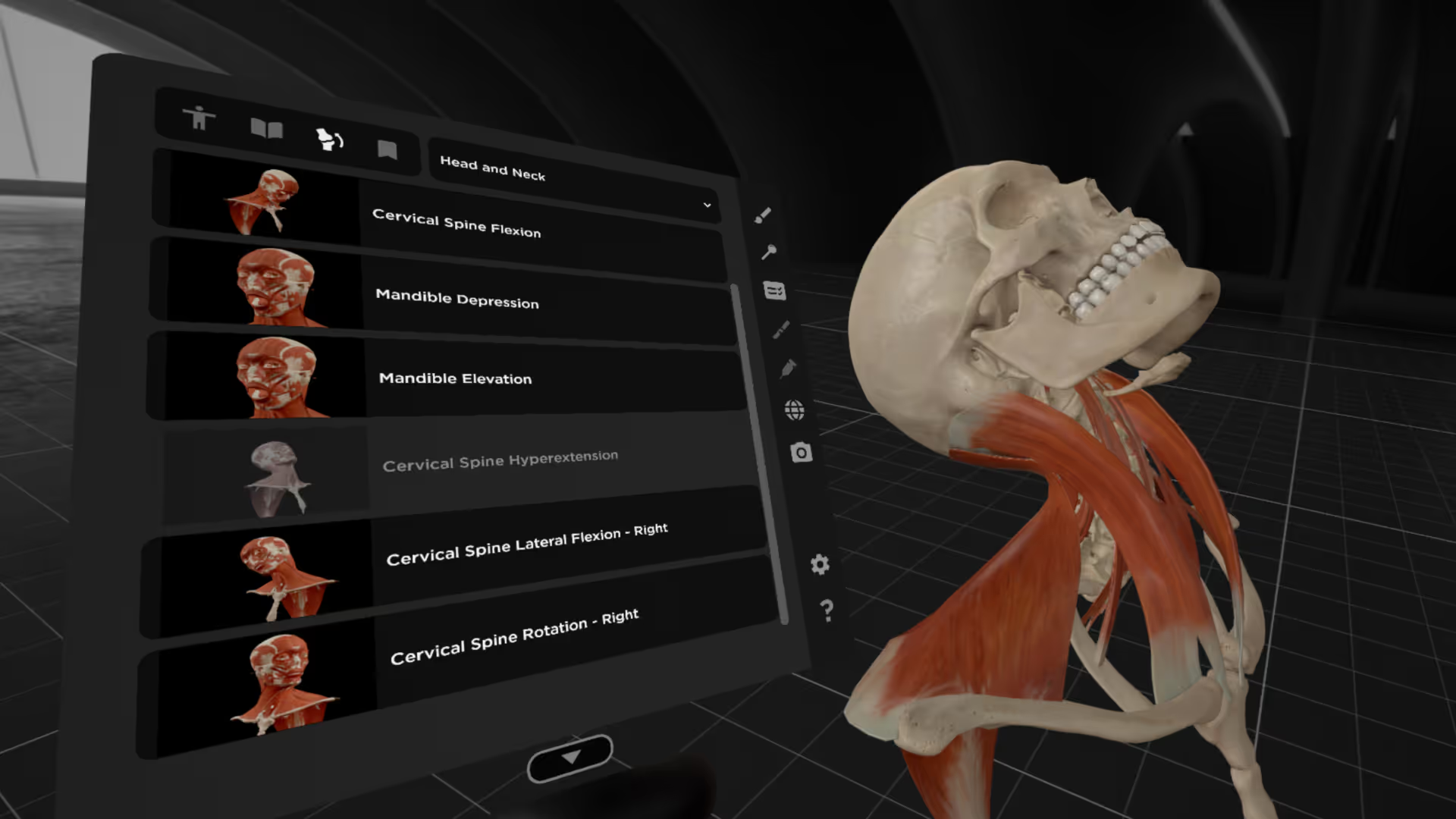
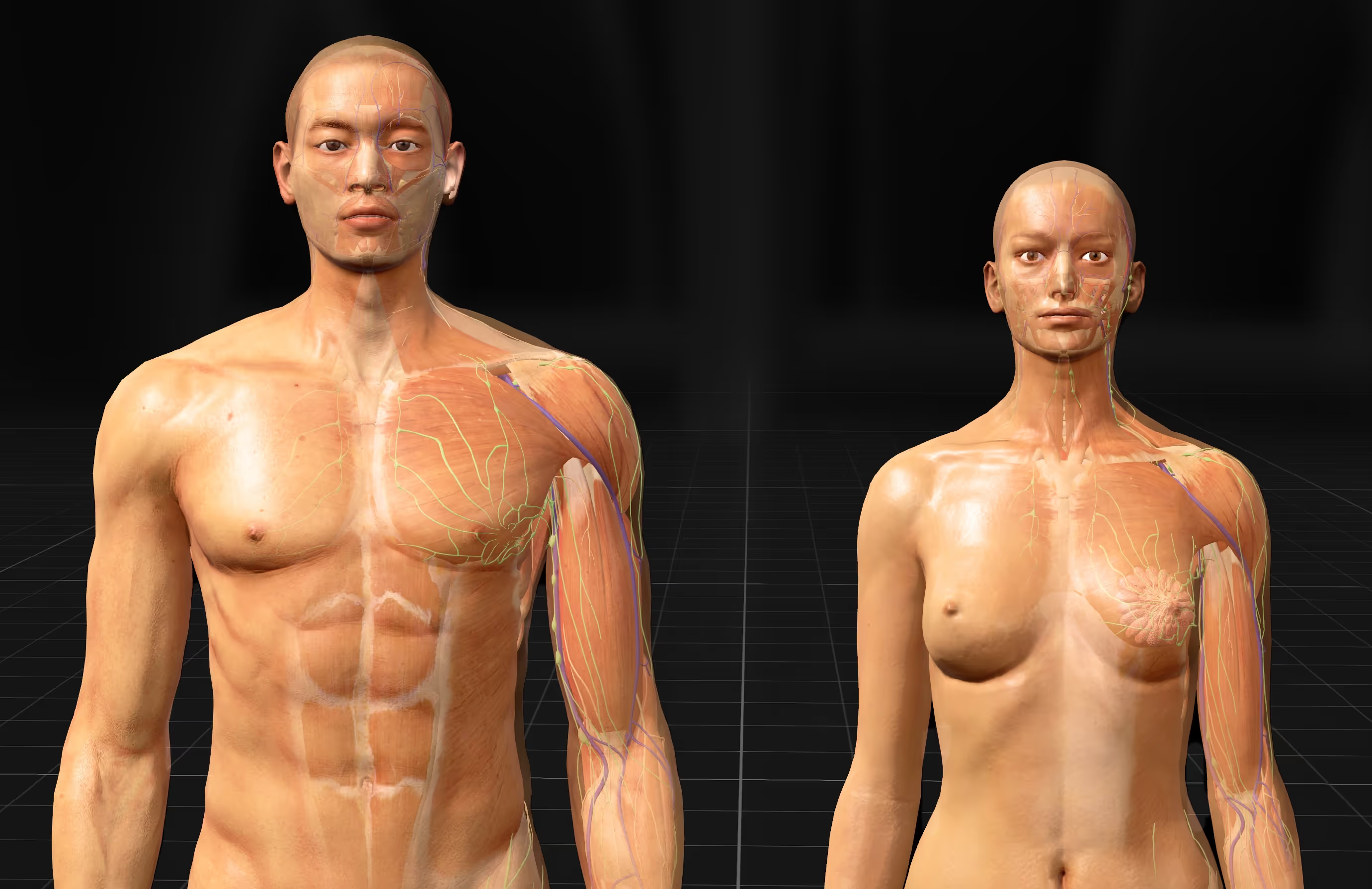
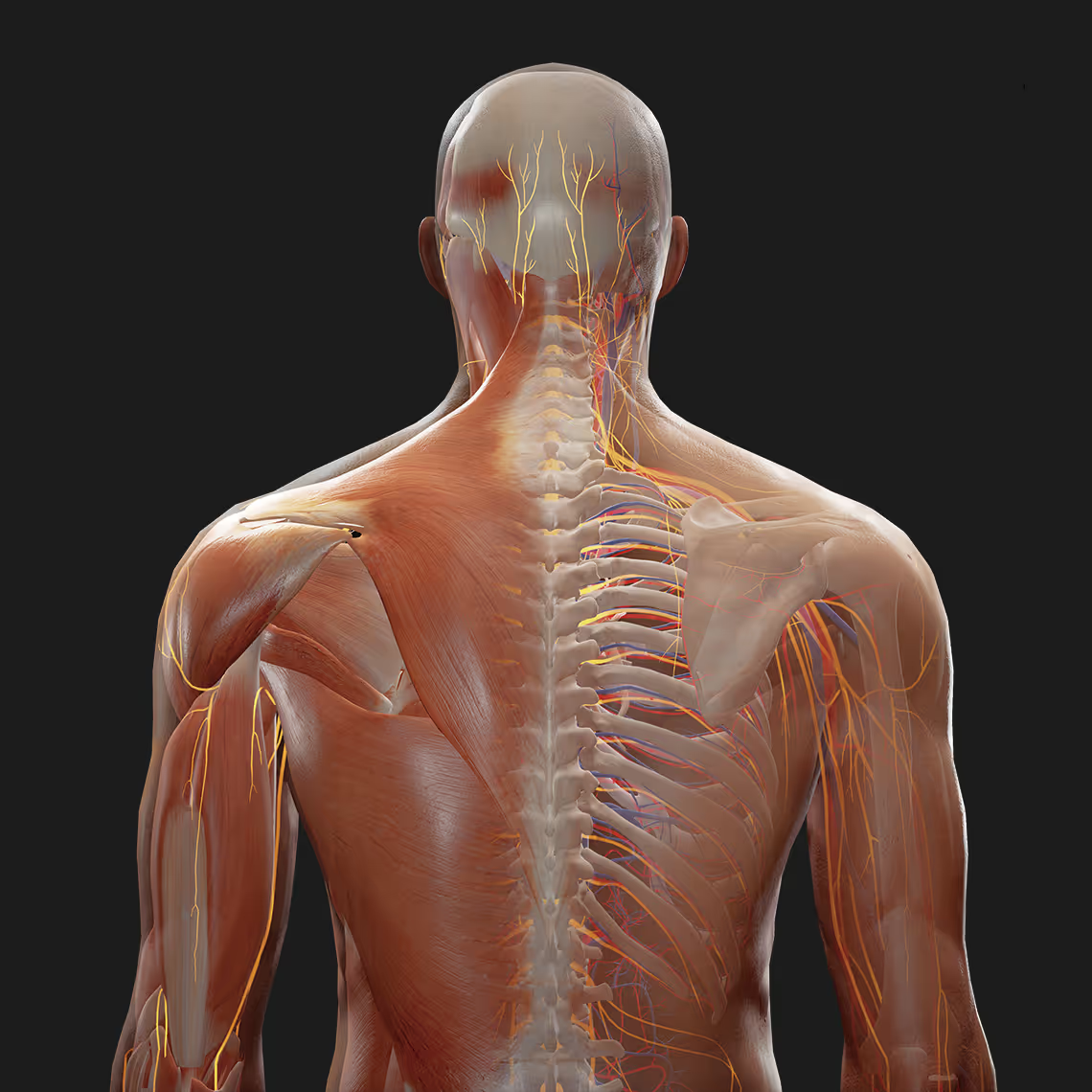
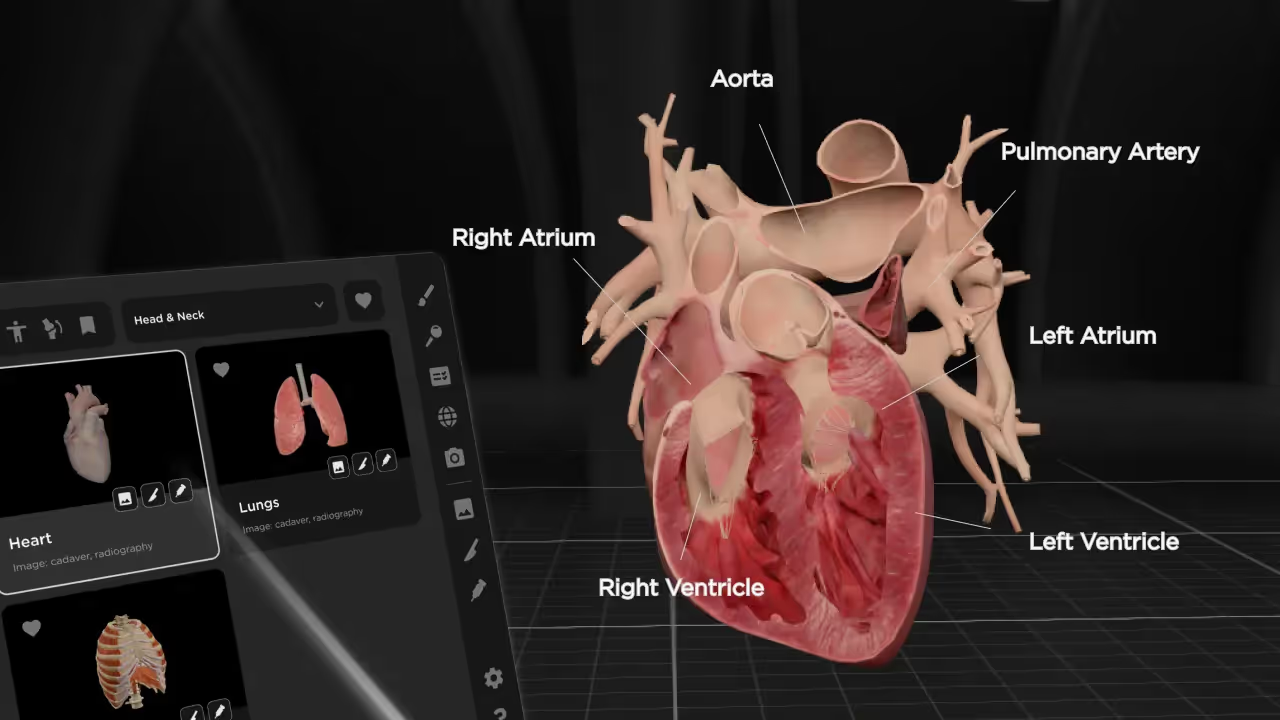
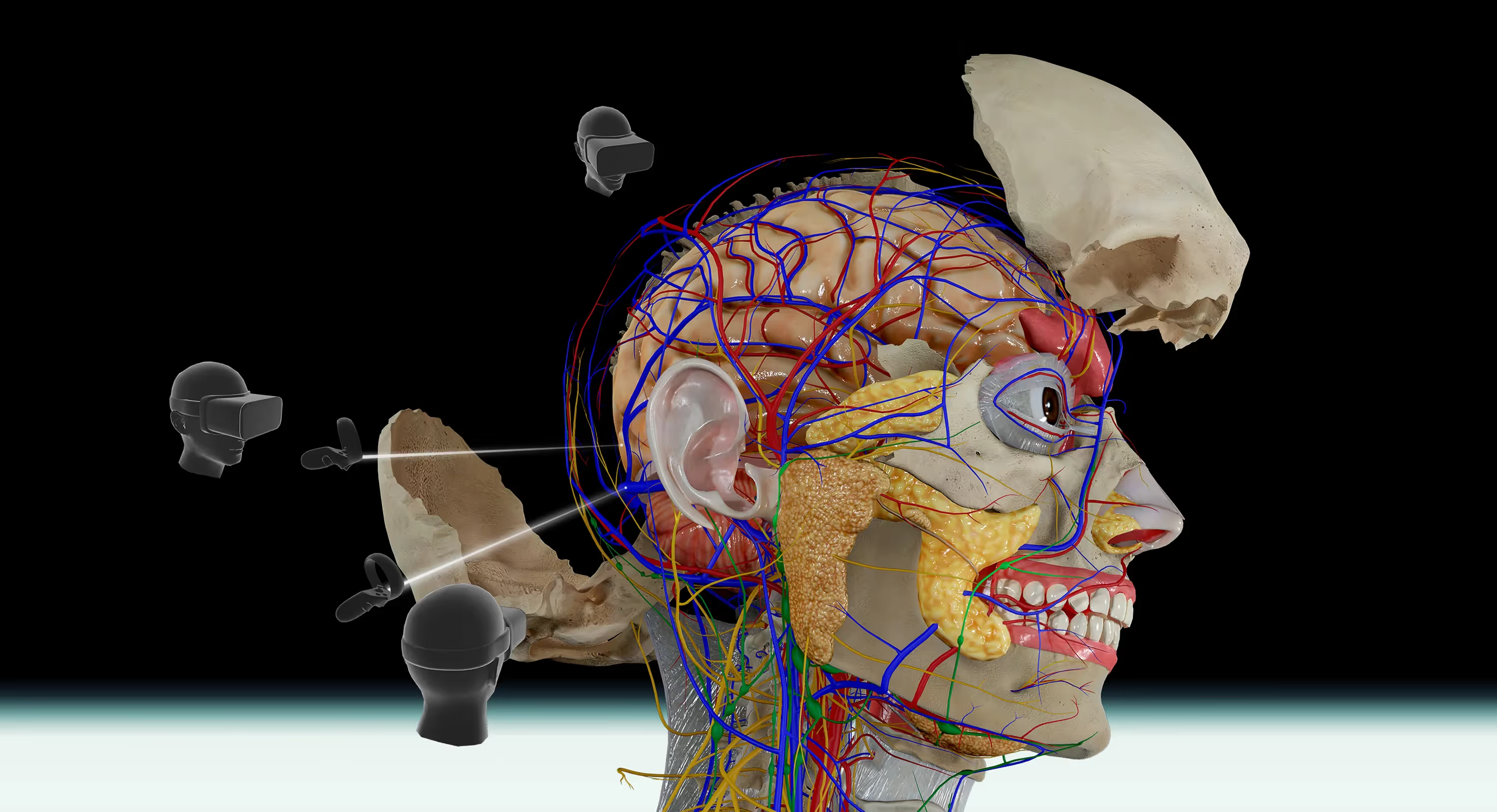
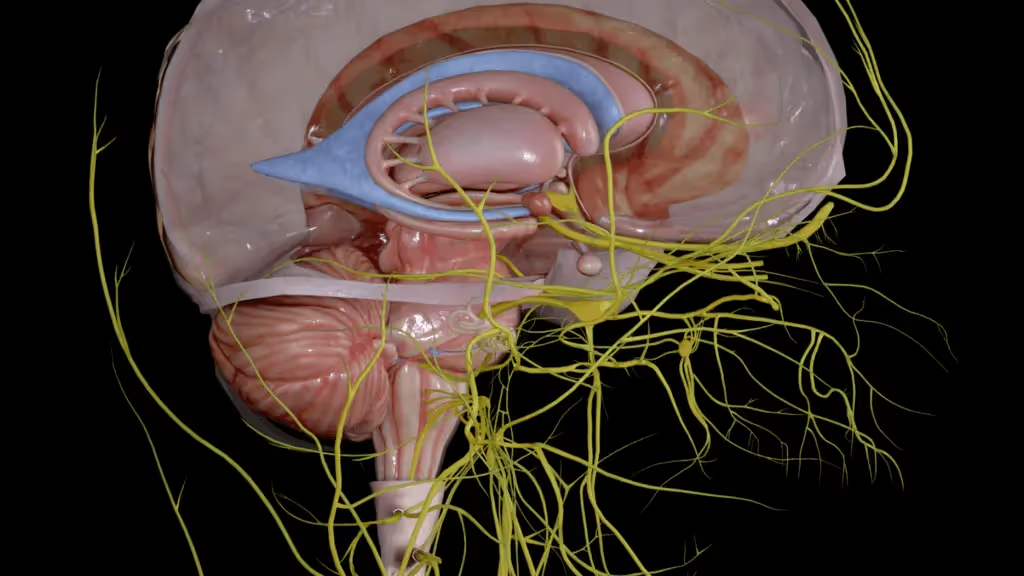
AcuMap displays all 12 primary meridians and 8 extraordinary vessels as three-dimensional pathways overlaid on a complete anatomical model. When you enter the virtual lobby environment, you're immediately immersed in a space where you can walk around a life-sized human body model, examining it from any angle. Using the intuitive Meridian Menu, you can select individual meridians from the interface, causing the chosen pathway to illuminate while dimming others for focused study.
The educational benefit is transformative. Students see exactly how meridians flow through the body in relation to muscles, bones, and organs—not just as lines on a flat surface. Following the Lung meridian from its origin in the middle jiao to its termination at the thumb, you observe how it travels through the chest, emerges at the shoulder, descends along the anterior arm, and crosses the wrist. The pathway's continuity in 3D space reinforces understanding of channel theory and point relationships in ways that textbook diagrams simply cannot achieve.
For acupuncture students building foundational understanding of meridian theory, this means exploring pathways independently, pausing and reviewing as needed without instructor pressure. TCM practitioners can refresh their knowledge of rarely-used meridians or complex pathway branches—like the divergent channels or luo-connecting vessels—with visual clarity that makes theoretical concepts immediately graspable. Integrative medicine schools can standardize meridian instruction across multiple instructors and class sections, ensuring every student receives the same high-quality visualization regardless of which faculty member teaches their section.
Precise Acupoint Location with Anatomical Landmarks
Each acupoint appears as an interactive marker on the 3D body model. When you select a point, AcuMap's flashcard system triggers, displaying comprehensive information: the traditional point name and number, anatomical location description, underlying anatomical structures (muscles, bones, nerves, vessels), clinical indications and functions, and needling depth and angle recommendations.
This multi-sensory learning approach—visual (seeing the point), spatial (understanding its 3D location), and textual (reading detailed information)—combines for stronger retention than any single method alone. Research in cognitive science consistently shows that multi-modal learning produces better outcomes than traditional single-channel instruction.
The anatomical safety component is particularly valuable. When you select Stomach 9 (Renying), located on the neck lateral to the laryngeal prominence, the flashcard doesn't just tell you the point is near the carotid artery—you can see the artery's position relative to the acupoint in three dimensions. This visualization builds safety awareness before clinical practice, helping students understand why this point requires extremely careful needling technique and why many practitioners avoid it entirely in favor of safer alternatives.
Acupuncture students preparing for board exams use the flashcard system for efficient, comprehensive point memorization. The National Certification Commission for Acupuncture and Oriental Medicine (NCCAOM) examinations require detailed knowledge of point locations, functions, and indications—exactly what AcuMap's flashcards provide in an interactive, engaging format. Licensed acupuncturists can verify point locations for complex or rarely-used acupoints before patient treatment, reducing clinical uncertainty. Faculty ensure all students learn standardized point locations aligned with national examination requirements, improving program-wide pass rates.
360-Degree Exploration and Multi-Angle Viewing
Using intuitive gesture controls demonstrated in Tutorial 3: The Manipulations, users can rotate the 3D body model in any direction, zoom into specific regions, and view acupoints from anterior, posterior, lateral, medial, superior, and inferior perspectives. This manipulation capability transforms passive observation into active learning.
Understanding how to locate points from different patient positions—prone, supine, seated, side-lying—is critical for clinical practice. In a traditional classroom, an instructor might demonstrate Bladder 23 (Shenshu) on a prone model, but students treating seated patients must mentally translate that demonstration to a different viewing angle. With AcuMap, you simply rotate the model to match your patient's position, seeing exactly how the point appears from your actual treatment perspective.
Rotating the model also reveals the three-dimensional depth of acupoint locations, clarifying which points are superficial versus deep. Gallbladder 20 (Fengchi), located in the depression between the upper portion of the sternocleidomastoid and trapezius muscles, appears straightforward in textbook diagrams. But rotating the 3D model and viewing it from multiple angles reveals the pocket-like depression where the point is located and how the surrounding muscle bellies create the anatomical landmarks that define it.
Zooming into specific body areas allows detailed study of point clusters and their spatial arrangements. The hand contains numerous acupoints from multiple meridians in a small anatomical space. Zooming into the hand region and rotating it reveals how Large Intestine 4 (Hegu), located between the first and second metacarpal bones, relates spatially to nearby points like Large Intestine 3 (Sanjian) and Heart 8 (Shaofu). This regional understanding helps practitioners develop efficient point location workflows during treatment.
Practical Example: Student Learning Scenario
Consider a first-year acupuncture student learning the Stomach meridian. In traditional study, she would review a textbook diagram showing the meridian as a line on a flat body illustration, then attempt to locate ST-36 (Zusanli) on her own leg using the written description: "3 cun below ST-35, one finger width lateral to the anterior crest of the tibia."
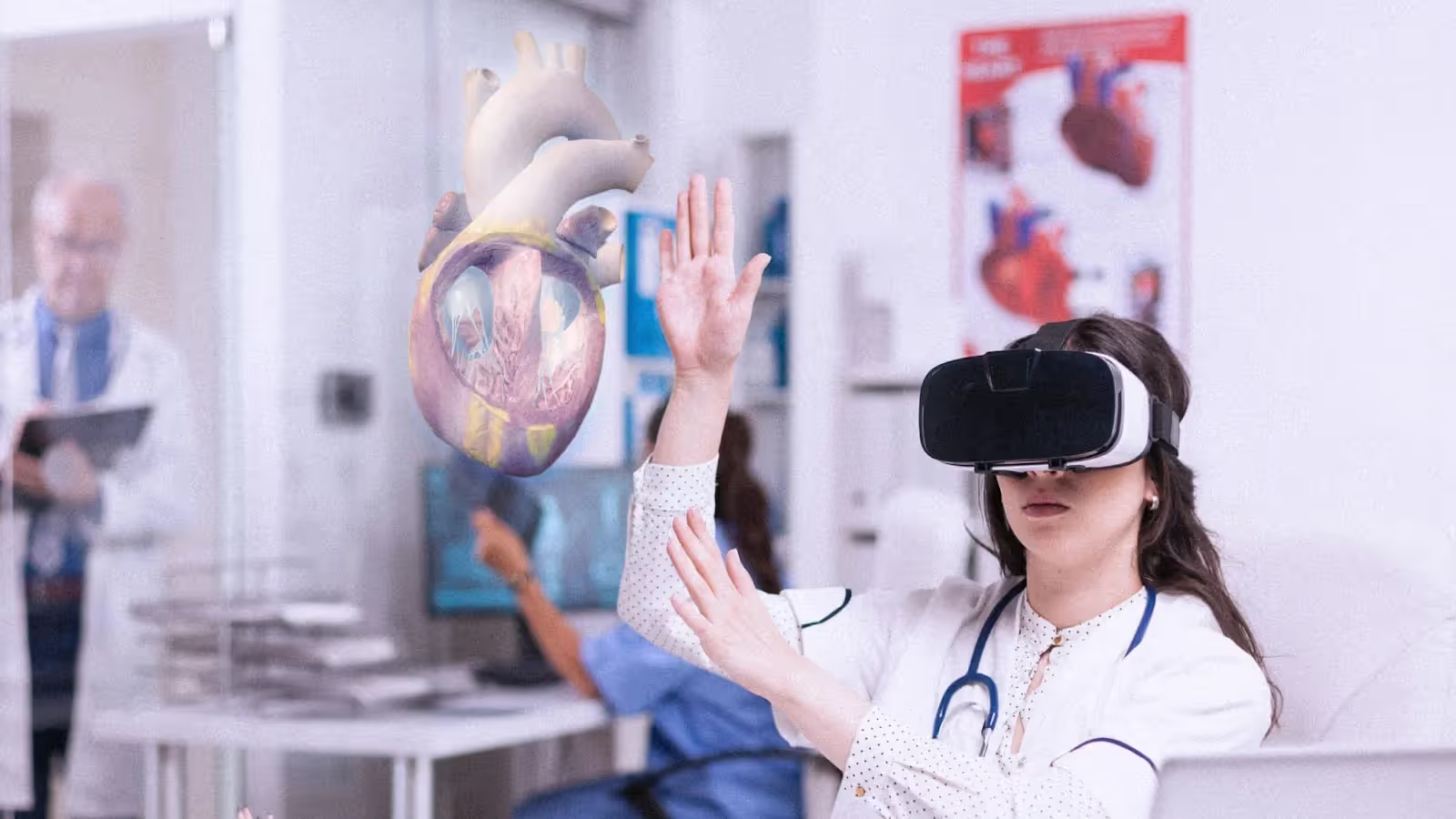
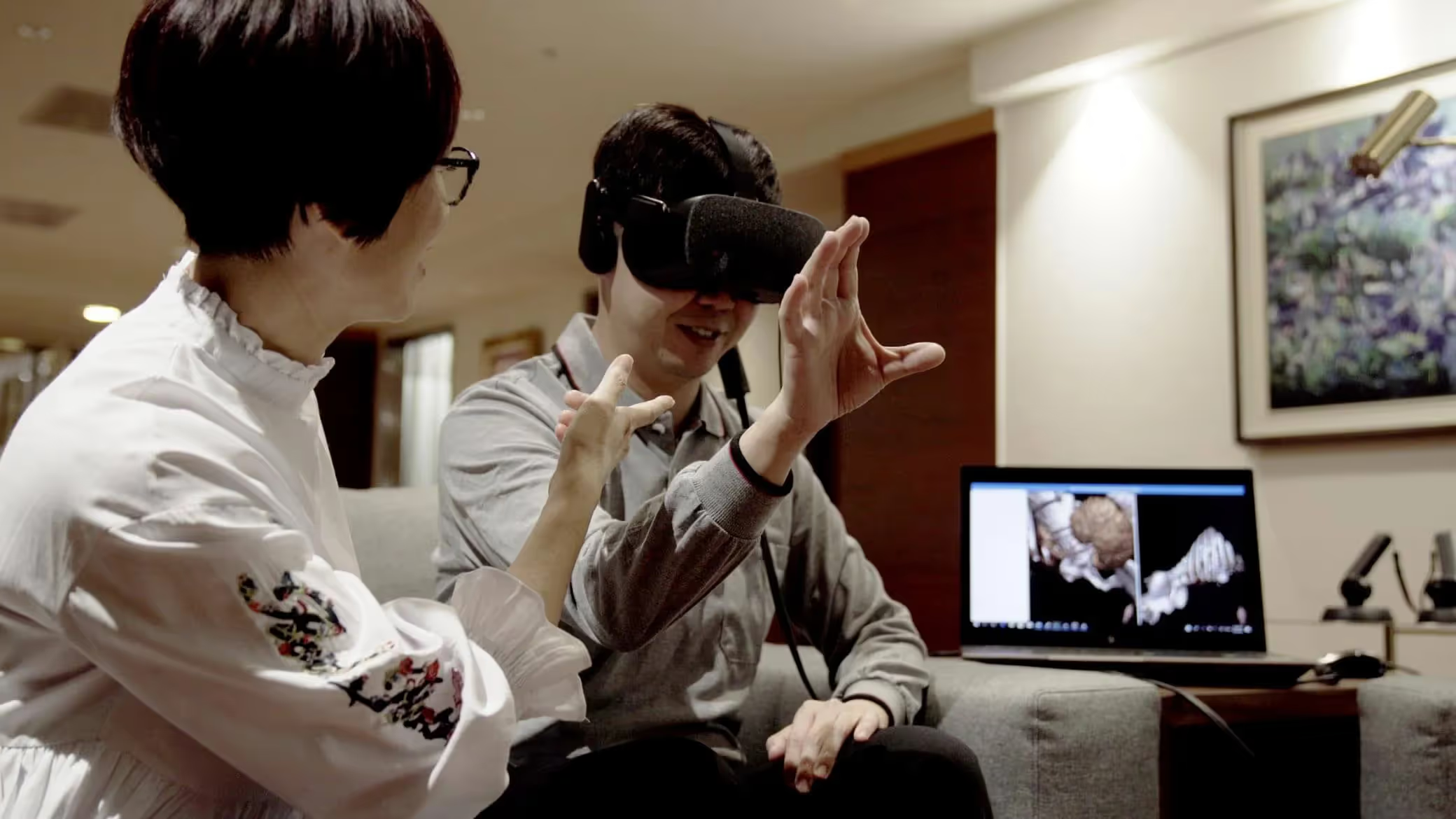
Using AcuMap, she puts on a VR headset and selects the Stomach meridian from the menu. The pathway illuminates in 3D, flowing down the leg. She rotates the model to view the lower leg from multiple angles, then selects ST-36. A flashcard appears showing the exact location, and she can see the point's relationship to the tibia, the tibialis anterior muscle, and surrounding acupoints. She zooms in, rotates the leg to match her own seated position, and uses the visual reference to locate the point on herself with confidence. She repeats this process for all Stomach meridian points in a single study session, building both theoretical knowledge and practical location skills simultaneously.
This integrated learning approach reduces the time from initial exposure to confident point location by an estimated 40-50% compared to traditional methods, based on early adopter feedback from acupuncture programs.
Precision Needle Technique Through Virtual Simulation
The Acupuncture Simulation Tool
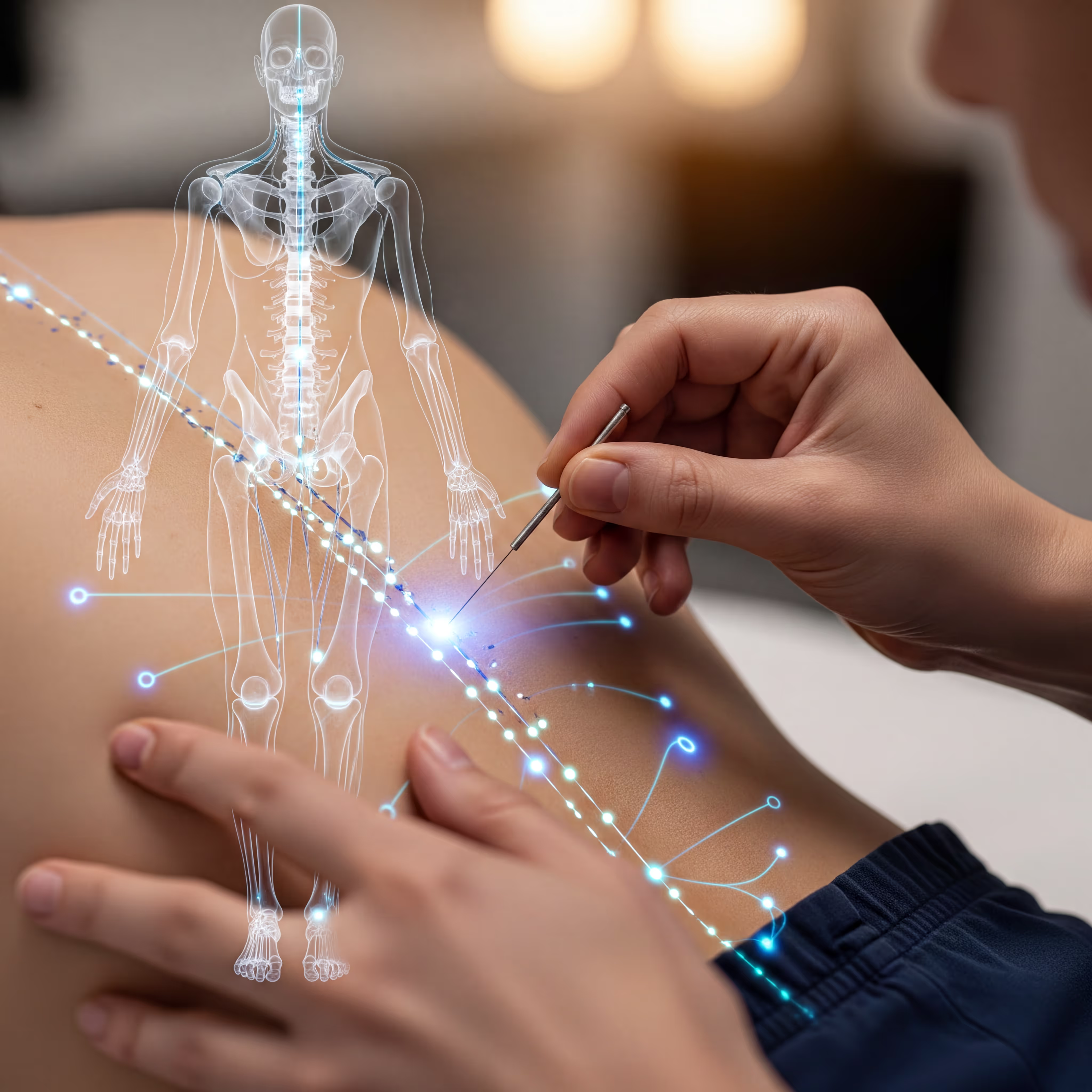
AcuMap's simulation mode, detailed in Tutorial 4: Acupuncture Simulation, allows users to practice virtual needle insertion at any acupoint. The system displays the recommended insertion angle as a visual trajectory line, real-time depth measurement as the virtual needle advances, underlying anatomical structures along the needle path, and feedback on whether insertion angle and depth match best-practice guidelines.
This risk-free practice environment addresses one of acupuncture education's most persistent challenges: students need extensive hands-on practice to develop competent needle technique, but practice opportunities are limited by partner availability, supervision requirements, and the inherent risks of practicing on live subjects before mastery.
With AcuMap, students can practice needle technique hundreds of times without requiring practice partners or risking patient safety. The immediate visual feedback shows whether needle angle and depth are correct, allowing instant technique correction rather than waiting for instructor observation and feedback. This repetition builds the motor patterns needed for confident clinical needling—what athletes call "muscle memory" and educators call "procedural learning."
Perhaps most importantly, seeing anatomical structures along the needle path reinforces understanding of safe versus unsafe insertion depths. When you practice needling Lung 1 (Zhongfu), located in the delto-pectoral triangle below the lateral end of the clavicle, the simulation shows the intercostal muscles, ribs, and lung tissue beneath. You can see exactly how deep you can safely needle before risking pneumothorax—a rare but serious adverse event associated with improper needling of thoracic points.
Mastering Insertion Angles
Proper needle insertion angle varies by acupoint and treatment goal. Some points require perpendicular insertion (90 degrees to the skin surface), others oblique angles (45 degrees), and still others transverse insertion (nearly parallel to the skin surface). Incorrect angles can result in ineffective treatment, patient discomfort, or injury to underlying structures.
For each acupoint, AcuMap displays the recommended insertion angle as a three-dimensional trajectory line. You can view this trajectory from multiple perspectives, understanding not just the angle in one plane but the complete three-dimensional needle path. This is particularly valuable for complex angles like those required for scalp acupuncture points or certain facial points where transverse insertion is necessary to avoid underlying bone or sensitive structures.
Understanding why certain angles are recommended—to avoid bone, vessels, or organs—reinforces safety principles. When you see that the oblique insertion angle for Stomach 1 (Chengqi), located below the eyeball, is specifically designed to direct the needle away from the globe and optic nerve, the rationale becomes immediately clear in a way that textbook warnings cannot achieve.
Understanding Safe Needling Depth
Needling depth must be sufficient to achieve therapeutic effect but not so deep as to risk injury to underlying structures. Depth recommendations are typically given in measurements (cun or inches), but translating these measurements to actual tissue depth—especially accounting for individual patient variation in body composition—requires experience.
AcuMap's simulation displays real-time depth measurement as the virtual needle advances, along with visualization of the anatomical structures at each depth level. You can see exactly what tissues the needle passes through and where critical structures are located. For a point like Conception Vessel 17 (Shanzhong), located on the sternum at the level of the fourth intercostal space, you can practice transverse insertion and see how the needle travels beneath the skin and superficial fascia, parallel to the sternum, without penetrating deeper structures.
This understanding helps practitioners adjust needling depth for patients with different body compositions. An athletic patient with well-developed musculature requires different depth than an elderly patient with muscle atrophy, even at the same acupoint. Seeing the anatomical layers in simulation builds the judgment needed to make these clinical adaptations safely.
Unlimited Repetition Without Resource Constraints
Traditional practice methods face inherent limitations. Practice partners have limited availability and tolerance for repeated needling. Physical models don't provide realistic tissue feedback. Clinical practice opportunities are limited by patient availability and supervision requirements. Mistakes during early practice can cause patient discomfort or injury, creating anxiety that impedes learning.
AcuMap eliminates these constraints. Users can repeat needle insertion at any point as many times as needed to achieve mastery. Students progress at their own speed without pressure from partners or instructors. Errors in virtual practice have no consequences, encouraging experimentation and learning. The system provides consistent feedback on technique accuracy, unlike subjective instructor observation that may vary between faculty members or across observation sessions.
For acupuncture students in their first clinical year, this means building needle technique confidence before patient contact—arriving at their first clinical rotation with hundreds of practice insertions already completed. Licensed acupuncturists learning new techniques like scalp acupuncture or trigger point needling can practice in a safe environment before applying these advanced methods clinically. Schools can provide unlimited practice opportunities without requiring additional faculty supervision or practice partner coordination. Distance learners can develop hands-on skills without being physically present in a classroom or clinic.
Practical Example: Practitioner Skill Refinement Scenario
Dr. Chen, a licensed acupuncturist with five years of experience, wants to add scalp acupuncture to her practice. Scalp points require precise transverse insertion at very specific angles, and she's concerned about practicing on patients without more preparation.
Using AcuMap, she selects the Motor Area scalp points and enters simulation mode. She can see the recommended transverse insertion angle as a 3D trajectory line and practice the needle insertion repeatedly. The system shows her when her angle deviates from the ideal trajectory, and she can view the scalp anatomy from multiple perspectives to understand why this specific angle is recommended—to travel between the skin and the galea aponeurotica, the dense fibrous tissue covering the skull.
After 30 minutes of focused practice on the key scalp points she plans to use, Dr. Chen feels confident in her technique. She's developed muscle memory for the unusual transverse insertion angle and understands the anatomical rationale. When she treats her first scalp acupuncture patient the following week, her needle technique is smooth and confident—as if she's done it many times before, because in VR, she has.
Collaborative Learning and Global Access
The Online Class Feature
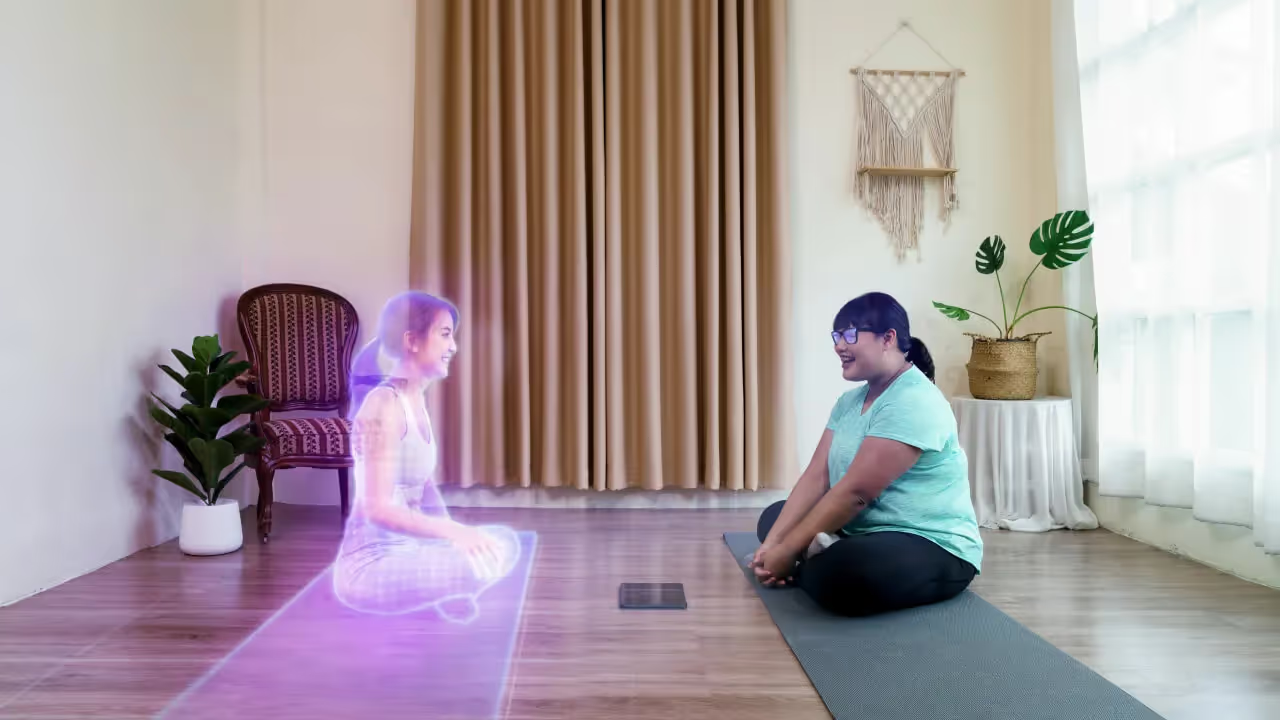
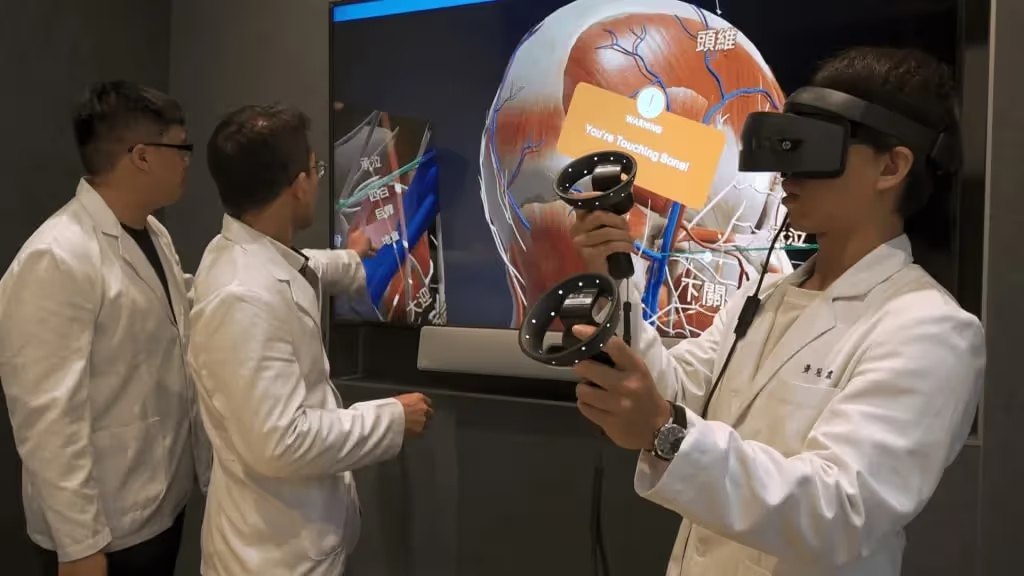
AcuMap's Online Class module, demonstrated in Tutorial 7, enables synchronous virtual instruction where an instructor and multiple students occupy the same virtual space. The instructor can demonstrate point locations and needle techniques on the 3D model, guide students through meridian pathways, observe student practice and provide real-time feedback, conduct interactive Q&A sessions, and share their view with all participants for coordinated learning.
This capability transforms acupuncture education by eliminating geographic barriers while maintaining—and in some ways enhancing—instructional quality. Traditional acupuncture education requires physical presence: students must be in the same room as the instructor to observe demonstrations and receive hands-on guidance. This creates significant barriers for students in rural or underserved areas who may lack access to quality acupuncture schools, working professionals who struggle to attend in-person classes, and institutions whose class size is limited by physical space and instructor capacity.
Virtual classrooms eliminate geographic barriers. Students worldwide can attend the same class, observe the same demonstrations, and receive individualized feedback, all from their own homes. An instructor in California can teach students in New York, Texas, and internationally in real-time, with each student having the same clear view of demonstrations that front-row students would have in a physical classroom.
Benefits for Integrative Medicine Schools
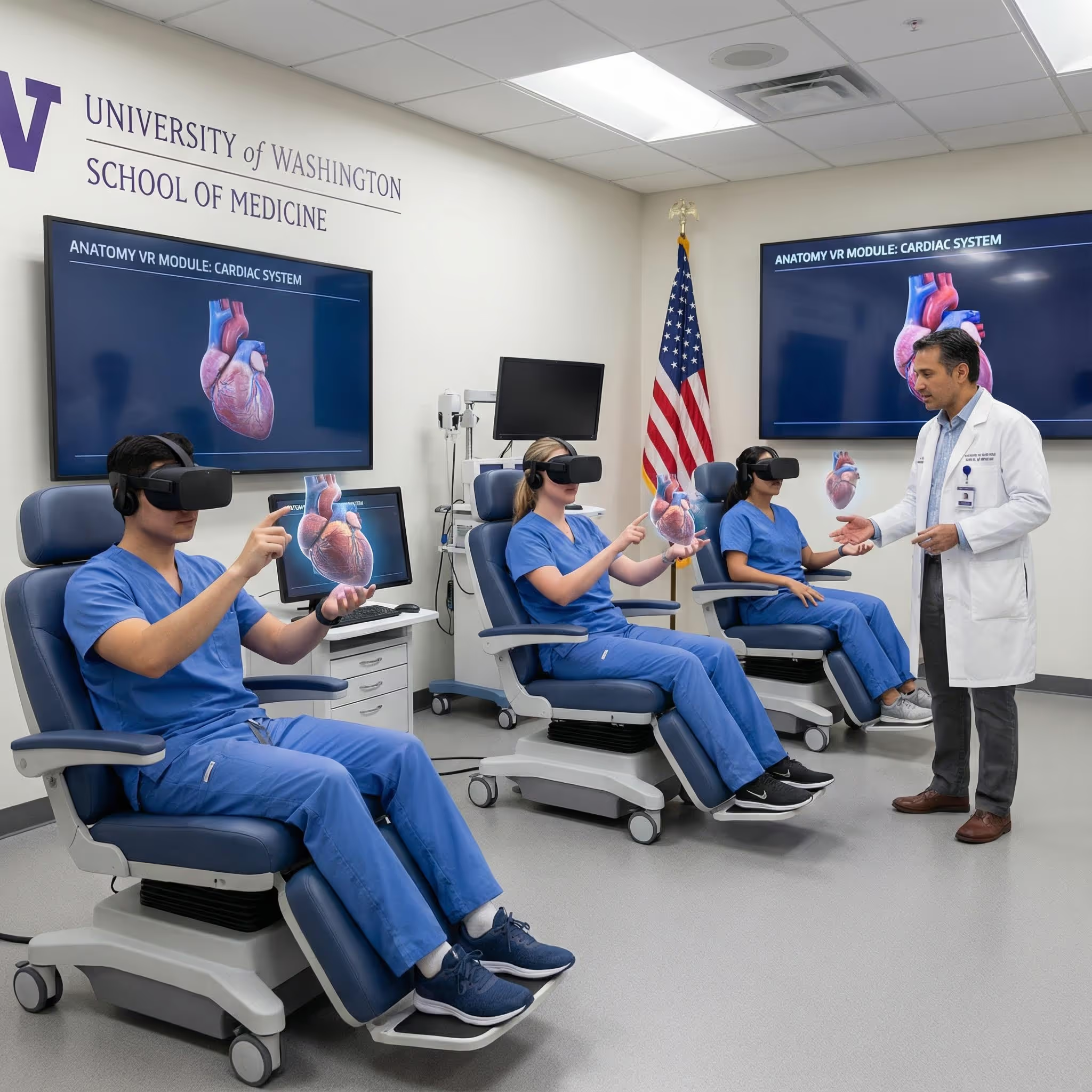
For educational institutions, AcuMap's collaborative features enable distance learning programs without sacrificing hands-on learning quality. Schools can offer fully online or hybrid acupuncture programs, expanding their reach beyond their immediate geographic area. Alumni and practicing acupuncturists can access continuing education workshops without travel requirements, creating new revenue streams for institutions. Schools can invite renowned practitioners from anywhere in the world to teach specialized techniques as guest instructors, enriching their curriculum without travel costs.
The instructional quality improvements are substantial. All students see the same clear, detailed demonstrations regardless of their position in a physical classroom—no more craning necks to see over classmates or missing subtle hand movements from the back row. Classes can be recorded for student review, accommodating different learning paces and allowing students to revisit complex concepts. Instructors can manipulate the 3D model in ways impossible with physical models or live demonstrations, such as making anatomical layers transparent to show deep structures or simultaneously displaying multiple meridians to illustrate their relationships.
Simulation features allow instructors to evaluate student technique with measurable precision. Rather than subjectively observing whether a student's needle angle "looks right," instructors can see exact angle measurements and provide specific, objective feedback.
Benefits for Students and Practitioners
Students and practitioners gain access to global expertise and flexible learning opportunities. You can connect with students and practitioners worldwide, sharing knowledge and perspectives in the multi-user lobby. Specialized training in advanced techniques—auricular acupuncture, scalp acupuncture, sports acupuncture—becomes accessible through virtual workshops taught by leading experts, regardless of where you live.
Licensed acupuncturists can fulfill continuing education requirements through virtual workshops and seminars, eliminating travel time and costs. For practitioners in rural areas or those with family obligations that make travel difficult, this access to high-quality continuing education is transformative.
The self-directed learning capability means you can study anytime, anywhere, on your own schedule. Review point locations at 10 PM after your children are asleep. Practice needle technique for 20 minutes before your morning clinic. Join a study group with classmates across multiple time zones for collaborative review sessions. Spend extra time on challenging concepts without holding back classmates or feeling rushed by class schedules.
Real-World Implementation
Several integrative medicine schools have already incorporated AcuMap into their curricula with measurable results. Early adopters report increased student confidence in point location accuracy, improved board examination pass rates for acupuncture point identification sections, higher student satisfaction with hands-on learning opportunities, and successful expansion of distance learning programs without compromising educational quality.
One California-based acupuncture program reported that students who used AcuMap for meridian pathway review scored an average of 12% higher on point location practical examinations compared to students in previous cohorts who used only traditional study methods. Student feedback consistently highlighted the ability to "see the meridians in 3D" as the most valuable aspect of their learning experience.
Bridging Traditional Knowledge with Modern Technology
Respecting TCM Foundations While Embracing Innovation
Traditional Chinese Medicine has a 2,000-year history of clinical effectiveness and theoretical sophistication. Any educational technology must honor this tradition while making it more accessible to modern learners. AcuMap achieves this balance through careful attention to content authenticity.
All meridian pathways, acupoint locations, and clinical information in AcuMap are based on authoritative TCM texts and standards, including the WHO Standard Acupuncture Point Locations and classical texts like the Huangdi Neijing. Points are identified by their traditional names and numbering systems—not simplified or westernized versions. Meridian relationships, point functions, and treatment principles reflect classical TCM understanding, not modern reinterpretations divorced from traditional theory.
The innovation lies in visualization, not content alteration. Ancient knowledge is presented through cutting-edge technology, making it more accessible without changing its essence. A student learning the Kidney meridian in AcuMap learns the same pathway, the same point locations, and the same theoretical principles they would learn from a master practitioner using traditional teaching methods—but with the added benefit of three-dimensional spatial visualization that makes abstract concepts tangible.
The Flashcard System: Familiar Learning, Enhanced Delivery
Flashcards are a time-tested study method for acupuncture students memorizing hundreds of acupoints. Traditional paper flashcards work, but they have limitations: no spatial context for point locations, no visual representation of underlying anatomy, difficulty organizing and carrying hundreds of cards, and no interactive practice component.
AcuMap's enhanced flashcard system, detailed in Tutorial 5, integrates familiar study methods with immersive technology. Each flashcard is linked to the exact point location on the anatomical model, providing spatial context. Comprehensive information—traditional point functions, modern clinical applications, needling technique, and safety considerations—appears in one place, eliminating the need to cross-reference multiple textbooks. Students can quiz themselves on point identification, location, and functions, with the system tracking which points they've mastered and which need more review.
Students report that the integrated flashcard system significantly reduces study time while improving retention. Instead of switching between textbooks, flashcards, and anatomical models, all information is accessible in one immersive environment. One student described it as "having a master practitioner standing next to you, pointing to each acupoint on a real body and explaining everything you need to know about it—except you can do this anytime, anywhere, as many times as you need."
Addressing Technology Hesitancy
Some traditional TCM practitioners and educators may be skeptical of technology-based learning, concerned that it replaces hands-on learning rather than enhancing it, oversimplifies complex TCM concepts, creates distance between student and teacher, or requires technical expertise they don't possess.
These concerns are understandable but unfounded. AcuMap is designed to be intuitive and accessible, even for users with no prior VR experience. The gesture-based navigation demonstrated in Tutorial 3 feels natural after just a few minutes of practice—you reach out and grab the model to rotate it, pinch your fingers to zoom, just as you would manipulate a physical object. Comprehensive video tutorials guide you through all essential features, with Tutorial 1: Getting Started covering platform setup and basic navigation in just 10 minutes. Most users are comfortable with core features within 30 minutes of first use.
AcuMap complements traditional teaching methods rather than replacing them. Students still practice on live subjects, still receive hands-on instruction from faculty, still develop the palpation skills and clinical judgment that can only come from patient interaction. But they arrive at these traditional learning experiences better prepared, with stronger foundational knowledge and more developed technique, because they've had extensive practice in a safe virtual environment first.
The technology requirements are modest. AcuMap works with widely available, affordable VR headsets like the Meta Quest 2 or 3 (standalone, no computer required, $299-$499) as well as PC-based systems like the HTC Vive for users who want enhanced graphics. No special technical skills are required—if you can use a smartphone, you can use AcuMap.
Research-Backed Effectiveness
MAI's medical school partners using BodyMap for anatomy education have reported strong student preference for VR-based learning over traditional methods, improved confidence in spatial understanding of anatomical relationships, better retention of complex three-dimensional structures, and increased engagement and motivation in anatomy coursework.
While comprehensive research on VR for acupuncture education is still emerging, early adopters report faster point location mastery among first-year students, reduced anxiety about transitioning to clinical practice, improved board examination performance on point identification sections, and greater willingness to use complex or rarely-taught acupoints in clinical practice.
These outcomes align with broader research on immersive technology in healthcare education. A 2023 meta-analysis published in Medical Education found that VR-based training improved procedural skill acquisition by an average of 27% compared to traditional methods, with particularly strong effects for spatial reasoning tasks—exactly the type of learning required for acupoint location.
Practical Implementation and Getting Started
Who Should Use AcuMap?
Acupuncture Students: If you're currently enrolled in an acupuncture or TCM program, AcuMap can accelerate your point location memorization, build needle technique confidence before clinical rotations, provide unlimited practice opportunities outside of class time, and help you prepare for board examinations with interactive study tools. The investment in an affordable VR headset and AcuMap access pays dividends throughout your education and into your professional career.
Licensed Acupuncturists: If you're an established practitioner, AcuMap can refresh your knowledge of rarely-used points or meridians, help you learn new techniques like scalp or auricular acupuncture, provide a visual tool for patient education and treatment explanation, and support continuing education requirements through online workshops. Many practitioners report that visualizing anatomy in 3D has improved their point location accuracy even for points they've used for years.
Integrative Medicine Schools: If you're an educational institution, AcuMap can enhance your curriculum with immersive 3D learning experiences, enable distance learning programs without sacrificing educational quality, provide standardized instruction across multiple faculty and class sections, reduce costs associated with physical models and facility requirements, and attract students seeking modern, technology-enhanced education. Early adopter schools report that AcuMap has become a key differentiator in their recruitment efforts.
TCM Practitioners and Educators: If you teach acupuncture or practice TCM, AcuMap can demonstrate complex concepts more clearly than traditional methods, provide students with self-directed learning tools that reduce your instructional burden, enable you to teach students anywhere in the world through virtual classrooms, and ensure your instruction aligns with standardized point locations and techniques.
Technology Requirements and Getting Started
The technology barrier to entry is remarkably low. AcuMap works with the Meta Quest 2 or 3 (standalone, no computer required, $299-$499), HTC Vive (PC-based, higher cost but enhanced graphics), and other compatible VR systems. No special technical skills are required—the intuitive gesture-based controls feel natural within minutes, comprehensive video tutorials guide you through all features, and technical support is available for setup assistance.
For schools, AcuMap complements traditional teaching methods seamlessly. Use it in lab sessions for point location practice, assign it as homework for meridian pathway review, incorporate it into distance learning programs, and utilize it for competency assessment and skills testing. For individual learners, supplement textbook study with 3D visualization, practice needle technique between clinical sessions, review challenging concepts at your own pace, and connect with study groups in virtual lobbies.
Return on Investment
For institutions, the return on investment is substantial: reduced need for expensive physical anatomical models (which can cost thousands of dollars and serve only one student at a time), ability to serve more students without proportional facility expansion, enhanced recruitment through modern, innovative curriculum, and improved student outcomes and board examination pass rates.
For individual practitioners, the investment pays dividends through increased clinical confidence leading to better patient outcomes, ability to offer more treatment modalities expanding practice revenue, reduced continuing education travel costs, and professional development that directly improves clinical skills. Many practitioners report that improved point location accuracy and technique confidence have allowed them to achieve better treatment results, leading to increased patient satisfaction and referrals.
Conclusion
Acupuncture education has long faced a fundamental challenge: teaching students to locate and needle invisible points on invisible meridian pathways with precision and confidence. Traditional methods—textbook diagrams, physical models, and instructor demonstrations—provide valuable foundations but cannot fully bridge the gap between abstract theory and three-dimensional clinical reality.
By making the invisible visible through immersive VR and MR technology, AcuMap transforms how acupuncture is taught and learned. Students can see meridian pathways flowing through the body in three dimensions, practice needle techniques with real-time feedback, and master point locations through unlimited repetition—all in a safe, engaging virtual environment.
The benefits are comprehensive and measurable: enhanced spatial understanding through 3D visualization of meridians and acupoints in anatomical context, precision technique development via virtual needle simulation with angle and depth feedback, unlimited practice opportunities enabling risk-free skill building, global collaborative learning providing access to expert instruction regardless of location, accelerated mastery with faster point location memorization and technique confidence, clinical safety through better understanding of underlying anatomy, and flexible, accessible education allowing learning anytime, anywhere, at your own pace.
Whether you're an acupuncture student building foundational skills, a licensed practitioner expanding your clinical repertoire, an educator seeking to enhance your curriculum, or an institution modernizing your program, AcuMap offers practical, research-backed tools that improve learning outcomes and clinical confidence.
As healthcare education increasingly embraces immersive technology, early adopters gain significant advantages—students learn faster and with greater confidence, practitioners offer more effective treatments, and institutions attract students seeking modern, innovative training. AcuMap represents not just an incremental improvement in acupuncture education, but a fundamental transformation in how this ancient healing art is transmitted to new generations.
The invisible is now visible. The question is: are you ready to see it?
Explore AcuMap today and discover how immersive technology can elevate your acupuncture education, practice, and clinical outcomes. Visit MAI's website to watch tutorial videos, request a demonstration, or schedule a consultation with our education specialists to discuss how AcuMap can be integrated into your learning or teaching practice. The future of acupuncture education is here—and it's more precise, more accessible, and more effective than ever before.
About AcuMap
MAI builds BodyMap and AcuMap, an all-in-one VR and MR platform for learning human anatomy and acupuncture. The company offers highly detailed, interactive 3D body models that help students, instructors, and clinicians understand spatial relationships that are hard to grasp with traditional textbooks and static models. Their solutions are research-backed, with medical school partners reporting strong student preference and improved confidence when learning via VR. MAI focuses on making anatomy and acupuncture training more accessible by removing the need for cadaver labs and physical models, while supporting modern VR headsets like Meta Quest and HTC Vive devices.
Ready to enhance your precision acupuncture training?
Explore Our Tutorials: Learn more about AcuMap's capabilities at mai.ai/acumap-tutorials
This article was created to support Traditional Chinese Medicine practitioners, acupuncturists, integrative medicine schools, and acupuncture students in their journey toward precision-based practice.
Begin your VR anatomy journey today, sign up for a 7-day free trial.
Curriculum Integration Guides
Learn how to navigate the 3D model and utilize the tools to master human anatomy—all in one place.
.jpeg)
.avif)

.avif)
.avif)



The Benefits of Acupuncture for Pain Relief

The Importance of Regular Exercise for Mental Health
The Benefits of Meditation for Stress Reduction
The Importance of a Balanced Diet for Overall Health
The Benefits of Yoga for Mind and Body
The Benefits of Meditation for Stress Reduction